


Running Head: STRTEGIC PLAN a a a a a a a a a a a a a a a a a a a a a a a a a a a a a a a a a a a a a a a a a a a a a a a a a a a a a a a a a a a a a a a a a a a a a a a a a a a a a a a a a a a a a a a a 1
6-1 Milestone Two: Strategic Plan
MBA 580
November 21,2021
SNHU
STRTEGIC PLAN a a a a a a a a a a a a a a a a a a a a a a a a a a a a a a a a a a a a a a a a a a a a a a a a a a a a a a a a a a a a a a a a a a a a a a a a a a a a a a a a a a a a a a a a a a a a a a a a a a a a a a a a a a a a a a a a a a a a a a a a a
a a a a a a a a a a a a 2
A comprehensive strategic plan has been designed which would enable the luxury and
mass-market automobile business to adopt the incremental innovation strategy. Such a strategic
approach would enable the company to integrate recent technological features into its model and
gradually into its broader product line.
Analysis of competitors’ relative strength
Some of the main competitors of the company are BMW, Toyota, and Volkswagen. The
projected growth rate for BMW over the next decade is 3.7 %. The projected growth rate for
Toyota is 3.9 %, and the projected growth rate for Volkswagen during the same period is 4.3 %.
Some of the key factors that could come into play and contribute to their solid market
performance, solid brand reputation, and focus on innovation.
Competitors – Current Market share percentage for cars and trucks
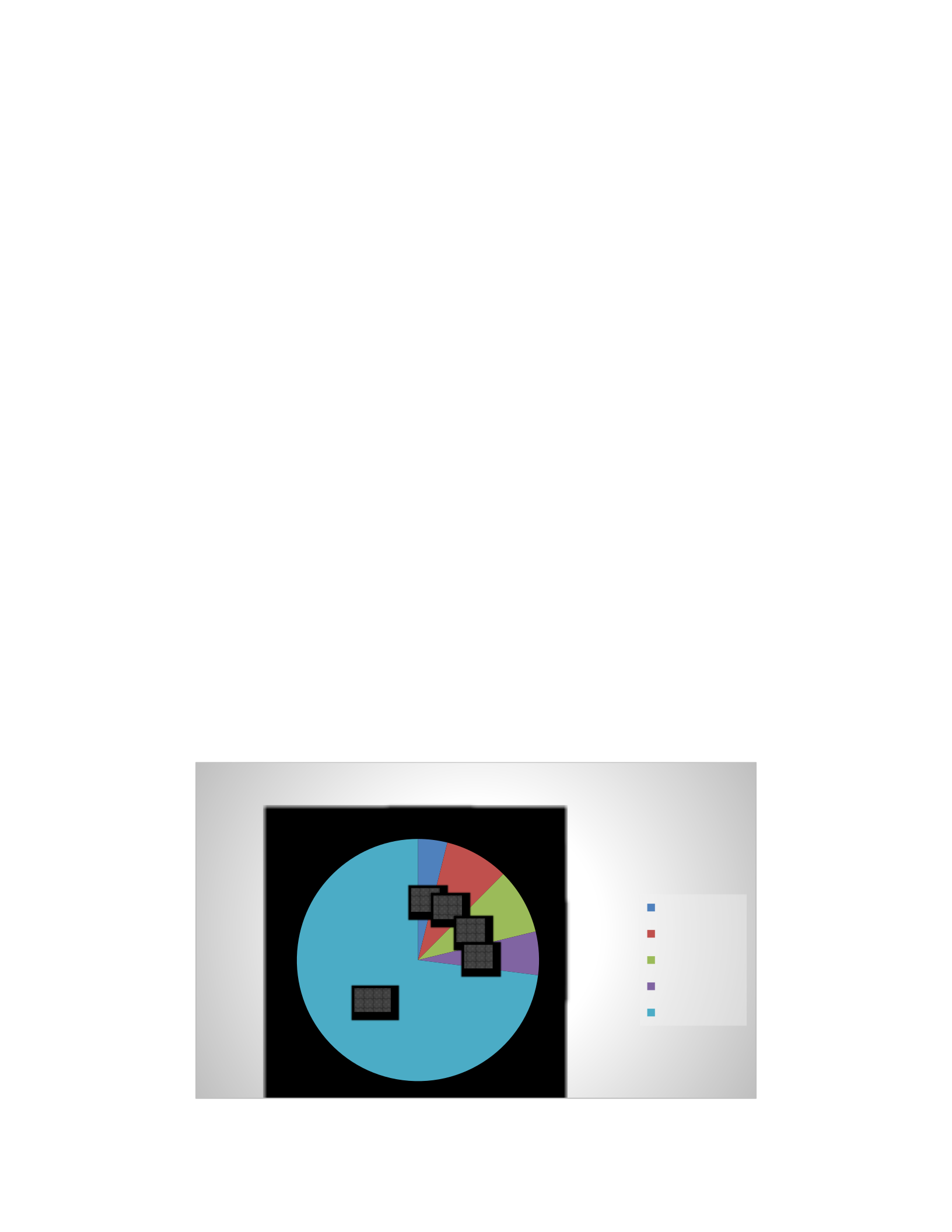
Each of the competitors has been capturing a considerable portion of the market share. The
main competitors, namely BMW, Toyota, and Volkswagen, currently capture 3.91 %, 8.53 %, and
8.76 %, respectively. The company has been facing the toughest competition from Volkswagen in
the car and truck market segment. a
4% 8%
9%
6%
73%
Currenta Marketa sharea percentagea fora carsa anda
trucksa
BMW
Toyota
VW
Own company
Others
STRTEGIC PLAN a a a a a a a a a a a a a a a a a a a a a a a a a a a a a a a a a a a a a a a a a a a a a a a a a a a a a a a a a a a a a a a a a a a a a a a a a a a a a a a a a a a a a a a a a a a a a a a a a a a a a a a a a a a a a a a a a a a a a a a a a
a a a a a a a a a a a a 3
Competitors – Market share percentage for cars and trucks in 2030
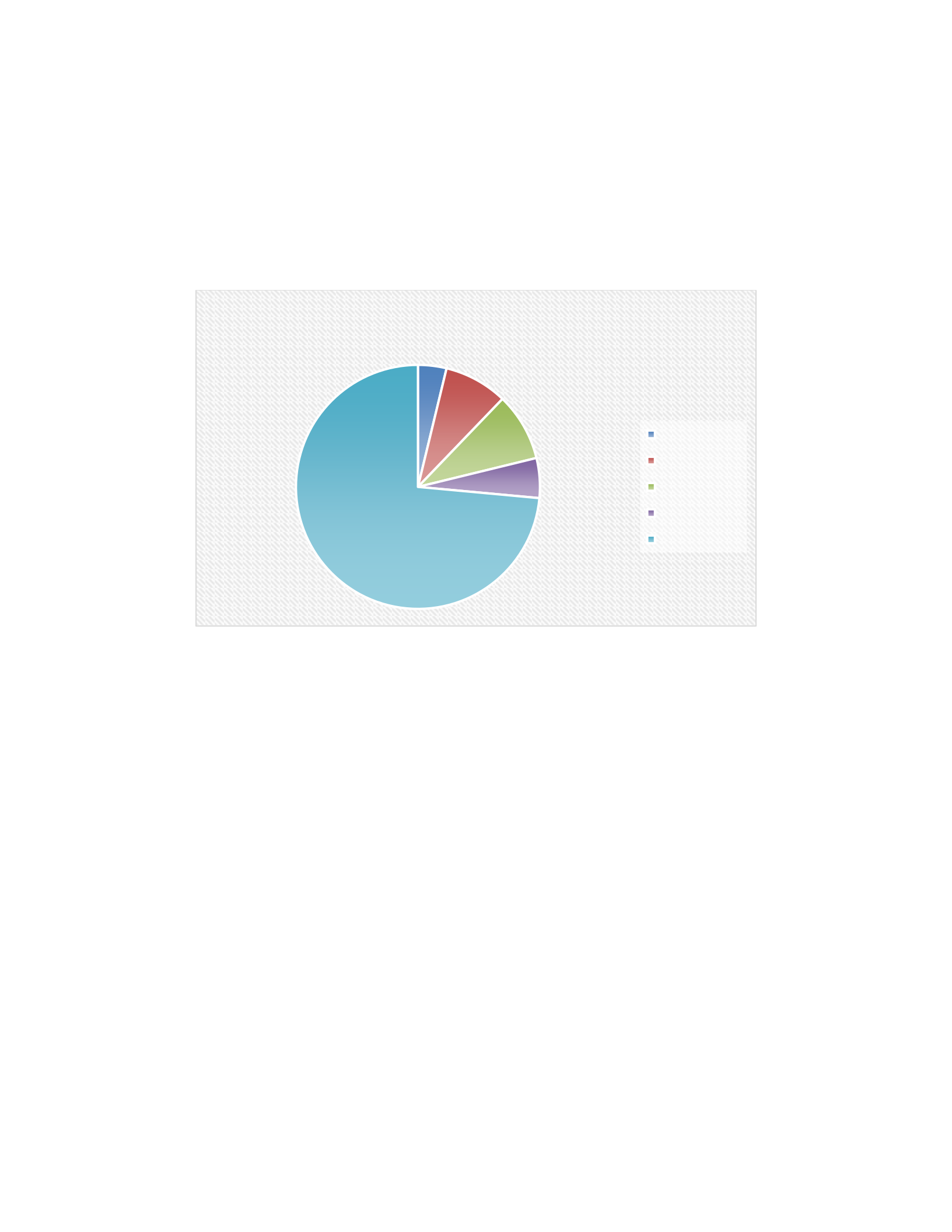
According to the forecasted growth figures of the competitors, the main competitors that
would be dominating the market are Volkswagen and Toyota. The luxury mass-mobility company
is expected to showcase better growth during the forecasted period than the BMW brand.
Competitors – Current Market share percentage for connected cars and trucks
At present, the competitors have been showcasing solid growth in the connected car and
truck market segment. The main rivals that have been leading in the market are Volkswagen and
Toyota, as they have respectively captured 15.5 % and 8.9 % of the market share. The luxury
automobile company has been demonstrating better performance than its competitor BMW.
4% 8%
9%
5%
74%
Currenta Marketa sharea percentagea fora carsa
anda trucksa ina 2030
BMW
Toyota
VW
Own company
Others
STRTEGIC PLAN a a a a a a a a a a a a a a a a a a a a a a a a a a a a a a a a a a a a a a a a a a a a a a a a a a a a a a a a a a a a a a a a a a a a a a a a a a a a a a a a a a a a a a a a a a a a a a a a a a a a a a a a a a a a a a a a a a a a a a a a a
a a a a a a a a a a a a 4
Competitors – Market share percentage for connected cars and trucks in 2030
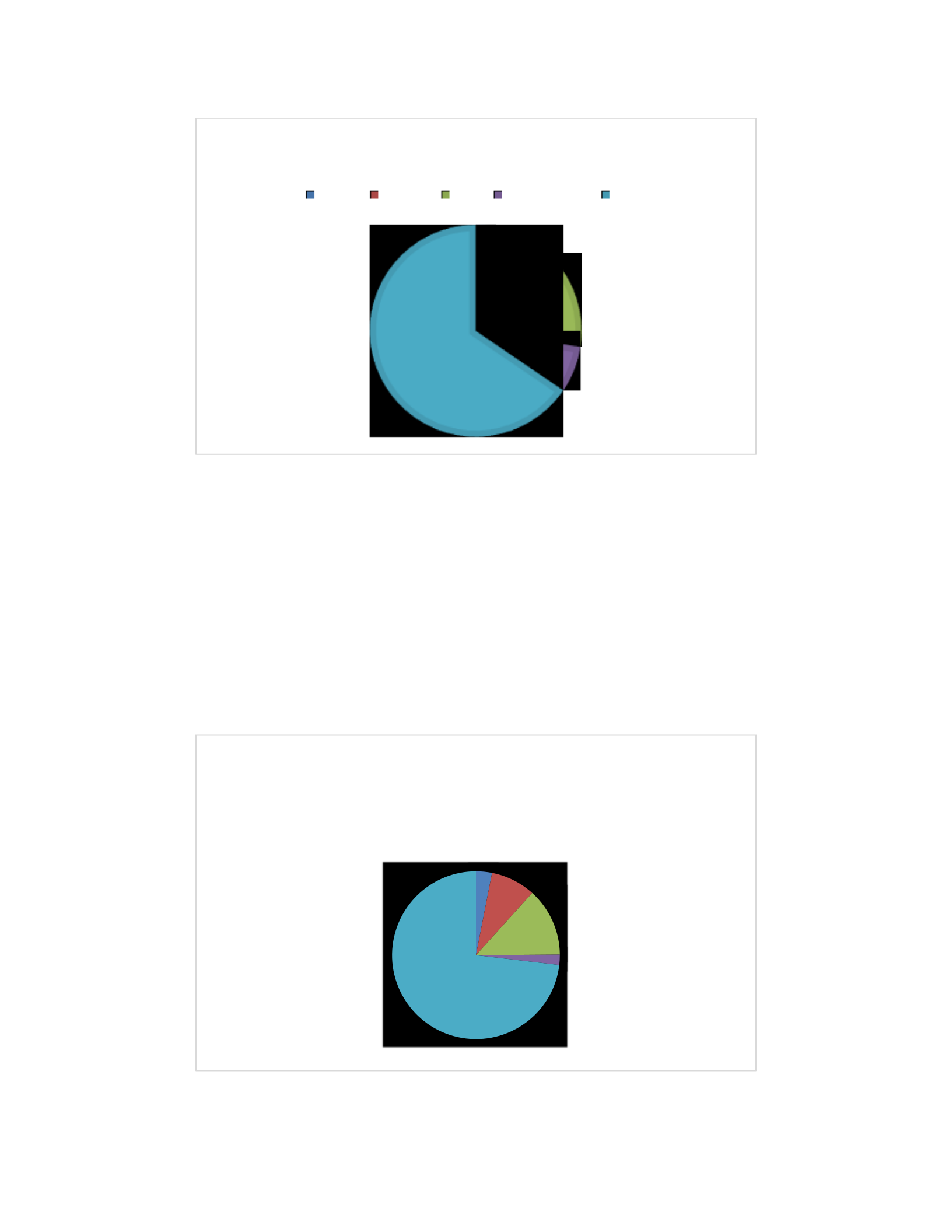
The forecasted market share of the company is poor, s it is expected to capture only 1.98 %
in the year 2030. The Volkswagen and Toyota brands are expected to give tough competition to
the business as they are forecasted to capture 13.19 % and 8.62 % of the market share,
respectively. Even though BMW is expected to capture merely 3.7 % but its performance during
the forecasted period is also expected to be better than the luxury automobile company.
3% 9%
16%
7%
65%
CURRENTA MARKETA SHAREA PERCENTAGEA FORA
CONNECTEDA CARSA ANDA TRUCKS
BMW Toyota VW Own company Others
BMW
3% Toyota
9%
VW
13%
Own company
2%
Others
73%
MARKETA SHAREA PERCENTAGEA FORA
CONNECTEDA CARSA ANDA TRUCKSA INA
2030A

STRTEGIC PLAN a a a a a a a a a a a a a a a a a a a a a a a a a a a a a a a a a a a a a a a a a a a a a a a a a a a a a a a a a a a a a a a a a a a a a a a a a a a a a a a a a a a a a a a a a a a a a a a a a a a a a a a a a a a a a a a a a a a a a a a a a
a a a a a a a a a a a a 5
Based on the comparative operating data of the companies, the operating income and net
income of Volkswagen and Toyota, which stand at 20.5 and 22.5, and a 16.1 and 19.7, act as their
major financial strengths. Similarly, the valuable assets of the companies also increase their
financial strength and give them a competitive advantage.
Company’s market share
The company’s current market share for cars and trucks as compared to that of its
competitors namely Toyota and Volkswagen is low. While the company has captured 5.8 % of the
market share, the two competitors have succeeded in capturing 8.53 %, and 8.76 %, respectively.
However, its share is higher than the BMW competitor since it has only captured 3.91 % of the
market share. In the connected automobile segment, the company has captured 7.10 % which is
below that of Toyota and Volkswagen. The main factors for the change in the market share
include changing preferences of customers, and high unpredictability.
The growth potential for the company in the cars and trucks in 2030 is 5.28 %, whereas its
growth potential in the connected cars and trucks segment in the year 2030 is 1.98 %. During the
forecasted period, the company is expected to lose the market share in both of the segments. The
decline in the share percentage in the connected segment is high as it would lose around 5 % of the
market share during the forecasted period. Thus, the potential for growth is bleak for the company
in the future.
The financials of the company show that revenue of the business currently stands at 187.1
billion, which is better than the financially of BMW but worse than that of Toyota and
Volkswagen. The company has the lowest volume of equity in comparison to all of its industry
rivals. It implies that the business mainly uses debt in order to acquire assets. It can be considered
to be a serious indication of financial risk for the business entity (Killingsworth et al., 2021).

STRTEGIC PLAN a a a a a a a a a a a a a a a a a a a a a a a a a a a a a a a a a a a a a a a a a a a a a a a a a a a a a a a a a a a a a a a a a a a a a a a a a a a a a a a a a a a a a a a a a a a a a a a a a a a a a a a a a a a a a a a a a a a a a a a a a
a a a a a a a a a a a a 6
Potential total available market
TAM – Cars and light vehicles
The TAM value for the global cars and light truck market segment in the year 2020 stands
at 322.70 billion. The company has made 187.10 billion in the current year. The performance of
BMW is lower as it has made only 126.10 billion. Toyota and Volkswagen brands have
dominated the specific segment as they have made 275.4 billion and 282.90 billion, respectively.
TAM – Connected vehicles
The future potential total available market (TAM) and growth for each chosen
product/service and technology is considered to be high. The TAM value of the global connected
cars and light trucks market is 53.9 billion. The company has been able to make 3.827 billion in
the specific market segment. The performance of BMW is lower as it has made 1.617 billion. The
Toyota and Volkswagen companies have been leading in the specific segment as they have been
able to make 4.797 billion and 8.355 billion, respectively.
Projected CAGR for cars and light trucks and connected vehicles
The projected compounded annual growth rate for cars and light trucks at the global level
over the next decade is 4.1 %. The company is expected to grow at a CAGR of 3.1 %. The
competitors BMW, Toyota, and Volkswagen, are expected to grow at a CAGR of 3.7 %, 3.9 %,
and 4.3 %, respectively.
The projected compounded annual growth rate for IoT cars and light trucks at the global
level is 25.2 %. The company is expected to witness a CAGR growth of 10.20 %. Its performance
is expected to be much lower than that of its industry rivals. BMW, Toyota, and Volkswagen
companies are expected to witness a CAGR of 25.50 %, 24.80 %, and 23.30 % over the next
decade in the specific market segment.

STRTEGIC PLAN a a a a a a a a a a a a a a a a a a a a a a a a a a a a a a a a a a a a a a a a a a a a a a a a a a a a a a a a a a a a a a a a a a a a a a a a a a a a a a a a a a a a a a a a a a a a a a a a a a a a a a a a a a a a a a a a a a a a a a a a a
a a a a a a a a a a a a 7
The fastest-growing competitor in the cars and light trucks segment is Volkswagen. The
business has been showcasing stable performance in terms of revenue, assets, as well as market
share. In the IoT cars and light trucks segment, Volkswagen is also expected to lead. Its solid
financial performance in terms of revenue and market share would influence its growth and
profitability.
Adjustments in case of change in business conditions
In case the business conditions change, there are a number of measures that the company
could take so that its innovative automobile offerings could be accepted in a better way by the
potential customers. In case the customers are slow to respond to the incremental innovation of
the business, and thus they do not buy the offerings, one of the main strategies that could be
adopted relates to the introduction of new promotion and advertisement. The business could
promote its improved offering on its social media channels and official business website. Such a
strategy would ensure that the customers are aware of the business and the improved connected
offering that it has introduced in the market. Researcher Milandra (2018) has argued in his study
that promotion can be used as a useful and effective marketing strategy for a business that could
positively influence its sales and revenue (Alexandrescu & Milandru, 2018). a a
In case one competitor of the luxurious automobile company is overtaking all the other
businesses including then the entity must try to work on gaining a competitive advantage. The
company could adopt the differentiation strategy for gaining a competitive advantage. It could try
to differentiate its offerings by strengthening the IoT-based features in its automobiles. Such a
strategy would help the company to showcase how it would create value or its intended market
audience (Widuri & Sutanto, 2019).
Steps from concept outline to launch

STRTEGIC PLAN a a a a a a a a a a a a a a a a a a a a a a a a a a a a a a a a a a a a a a a a a a a a a a a a a a a a a a a a a a a a a a a a a a a a a a a a a a a a a a a a a a a a a a a a a a a a a a a a a a a a a a a a a a a a a a a a a a a a a a a a a
a a a a a a a a a a a a 8
A series of steps would have to be adopted, starting from concept outline to launch. In
order to effectively adopt the incremental innovation strategy, it is vital for the business to
integrate new kinds of IoT-based features into the existing offerings. In order to succeed in the
new innovative strategy, the company would rely on a solid development size. The company
would have to develop its existing technology-based infrastructure so that the connectivity
competencies could be enhanced. In order to succeed in the strategic approach, the business
entity would require additional capital, as well as personnel. Additional financial capital would be
a fundamental necessity that would help the company work on its current connectivity capabilities
and integrate new attributes into them. Apart from capital, the company would also rely on
personnel who have high technical skills and expertise relating to the Internet of Things (IoT)
technology. Since the new strategic approach would be based on IoT technology, the skills of the
personnel in the specific domain would play an instrumental role in helping the automobile
company progress towards the intended path. While determining the timeline relating to the new
IoT-based product launch, the high emphasis would be given to the flexibility aspect. As
technology is continuously evolving in the prevailing times, maintaining a flexible timeline would
be vital so that the company could effectively work on the IoT-based features and attributes. The
time duration could span between six to eight months, depending on the specific areas in which
the connective capacity would be utilized. In order to work on the incremental innovation
strategy, it is necessary to follow systematic steps so that the company could identify the areas
where connectivity capabilities could be adopted to enhance the driving experience of the
customers.

STRTEGIC PLAN a a a a a a a a a a a a a a a a a a a a a a a a a a a a a a a a a a a a a a a a a a a a a a a a a a a a a a a a a a a a a a a a a a a a a a a a a a a a a a a a a a a a a a a a a a a a a a a a a a a a a a a a a a a a a a a a a a a a a a a a a
a a a a a a a a a a a a 9
References
Alexandrescu, M. B., & Milandru, M. (2018). Promotion as a form of Communication of the
Marketing Strategy. Land Forces Academy Review, 23(4), 268-274.
Killingsworth, J., Mehany, M. H., & Kim, J. (2021). Using accounting ratios to measure
construction industry lag. Journal of Financial Management of Property and Construction.
Widuri, R., & Sutanto, J. E. (2019, January). Differentiation strategy and market competition as
determinants of earnings management. In 3rd International Conference on Tourism,
Economics, Accounting, Management, and Social Science,(TEAMS 2018) (Vol. 69).

