


BUSI 520
Chapter Sixteen: Developing Pricing Strategies and Programs
Understanding Pricing
Throughout most of history, prices were set by negotiating between buyers and sellers
Setting one price for all buyers is a relatively modern idea that arose with the
development of large-scale retailing at the end of the nineteenth century
Pricing In A Digital Age
Traditionally, price has operated as a major determinant of buyer choice
oConsumers and purchasing agents who have access to price information and price
discounters put pressure on retailers to lower their prices
oRetailers in turn put pressure on manufacturers to lower their prices
oThe result can be a marketplace characterized by heavy discounting and sales
promotions
The Internet has changed the way buyers and sellers interact
oBuyers can:
Get instant price comparisons from thousands of vendors
Check prices at the point of purchase
Name their price and have it met
Get products free
oSellers can:
Monitor customer behavior and tailor offers to individuals
Give certain customers access to special prices
oBoth buyers and sellers can:
Negotiate prices in online auctions and exchanges or even in person
A Changing Price Environment
Pricing practices have changed due to:
oThe recession in 2008-2009
oA slow recovery
oRapid technological advances
Some say new behaviors are create a sharing economy in which consumers hsare bikes,
cars, clothes, couches, apartments, tools, and skills and extracting more value from what
they already own
Trust and a good reputation are crucial in any exchange, but imperative in a sharing
economy
oMost platforms that are part of a sharing-related business have some form of self-
policing mechanism such as public profiles and community rating systems
Bartering
oBartering, one of the oldest ways of acquiring goods, is making a comeback
through transactions estimated to total $12 billion annually in the United States
oExperts advise using barter only for goods and services that someone would be
willing to pay for anyway
Renting
oThe sector of the new sharing economy that is really exploding is rentals
oRentTheRunway
oAirbnb
How Companies Price
In small companies, the boss often sets prices
In large companies, division and product line managers do
oEven here, top management sets general pricing objectives and policies and often
approves lower management’s proposals
Where pricing is a key competitive factor, companies often establish a pricing department
to set or assist others in setting appropriate prices
oThis department reports to the:
Marketing Department
Finance Department
Accountants
oIn B-to-B settings, research suggest that pricing performance improves when
pricing authority is spread horizontally across the sales, marketing, and finance
units and when there is a balance in centralizing and delegating that authority
between individual salespeople and teams and central management
Many companies do not handle pricing well and fall back on “strategies” such as: “We
calculate costs and add our industry’s traditional margins”
oOther commons mistakes are:
Not revising price often enough to capitalize on market changes
Setting price independently of the rest of the marketing program rather
than as an intrinsic element of market-positioning strategy
Not varying price enough for different product items, marketing segments,
distribution channels, and purchase occasions
For any organization, effectively designing and implementing pricing strategies requires a
throughout understanding of consumer pricing psychology and a systematic approach to
setting, adapting, and changing prices
Consumer Psychology and Pricing
Marketers recognize that consumers often actively process price information, interpreting
it from the context of:
oPrior purchasing experience
oFormal communications
oInformal communications
oPoint-of-purchase or online resources
oOther factors
Purchase decisions are based on how consumers perceive prices and what they consider
the current actual price to be—not on the marketer’s stated price
oCustomers may have a lower price threshold, below which prices signal inferior
or unacceptable quality, and an upper price threshold, above which prices are
prohibitive and the product appears not worth the money
oDifferent people interpret prices in different ways
Reference Prices
oAlthough consumers may have fairly good knowledge of price ranges,
surprisingly few can accurately recall specific prices
Often employ reference prices, comparing an observed price to an
internal reference price they remember or an external frame of reference
such as a posted “regular retail price”
oAll types of reference prices are possible, and sellers often attempt to manipulate
them
oMarketers encourage reference-price thinking by stating a high manufacturer’s
suggested price, indicating that the price was much higher originally, or by
pointing to a competitor’s high price
oWhen consumers evoke one or more frames of reference, their perceived price
can vary from the stated price
Research has found that unpleasant surprises—when perceived price is
lower than the stated price—can have a greater impact on purchase
likelihood than pleasant surprises
Consumer expectations can also play a key role in price response
On Internet auction sites such as eBay, when consumers know
similar goods will be available in future auctions, they will bid less
in the current auction
oClever marketers try to frame the price to signal the best value possible
Price-Quality Inferences
oMany consumers use price as an indicator of quality
Image pricing is especially effective with ego-sensitive products such as
perfumes, expensive cars, and designer clothing
oSome brands adopt exclusivity and scarcity to signify uniqueness and justify
premium pricing
For luxury-goods customers who desire uniqueness, demand may actually
increase price because they believe fewer other customers can afford the
product
Price Endings
oMany sellers believe prices should end in an odd number
Customers perceive an items priced at $299 to be in the $200 rather than
the $300 range; they tend to process prices “left to right” rather than by
rounding
Price encoding in this fashion is important if there is a mental price
break at the higher, rounded price
oAnother explanation for the popularity of “9” endings is that they suggest a
discount or bargain, so if a company wants a high-price image, it should probably
avoid the odd-ending tactic
One study showed that demand actually increased one-third when the
price of a dress rose from $34 to $39 but was unchanged when it role from
$34 to $44.
oPrices that end with 0 and 5 are also popular and are through to be easier for
consumers to process and retrieve from memory
Sale” signs next to prices spur demand, but only if no overused:
Total category sales are highest when some, but not all, items in a
category have sale signs; past a certain point, sale signs may cause
total category sales to fall
oPricing cues such as sale signs and prices that end in 9 are more influential when
consumers’ price knowledge is poor, when they purchase the item infrequently or
are new to the category, and when product designs vary over time, prices vary
seasonally, or quality or sizes vary across stores
They are less effective the more they are used
Limited availability also can spur sales among consumers actively
shopping for a product
Setting the Price
Introduction
A firm must set a price for the first time when:
oIt develops a new product
oIt introduces its regular product into a new distribution channel or geographical
area
oIt enters bids on new contract work
Most marketers have three to five price points or tiers
oHaving a range of price points allows a firm to cover more of the market and to
give any one consumer more choices
Step 1: Selecting the Pricing Objective
The company first decides where it wants to position its market offering
oThe clearer a firm’s objectives, the easier it is to set price
oFive major objectives are:
Survival
Maximum current profit
Maximum market share
Maximum market skimming
Product-quality leadership
Survival
oCompanies pursue survival as their major objective if they are plagued with:
Overcapacity
Intense competition
Changing consumer wants
oAs long as prices cover variable costs and some fixed costs, the company stays in
business
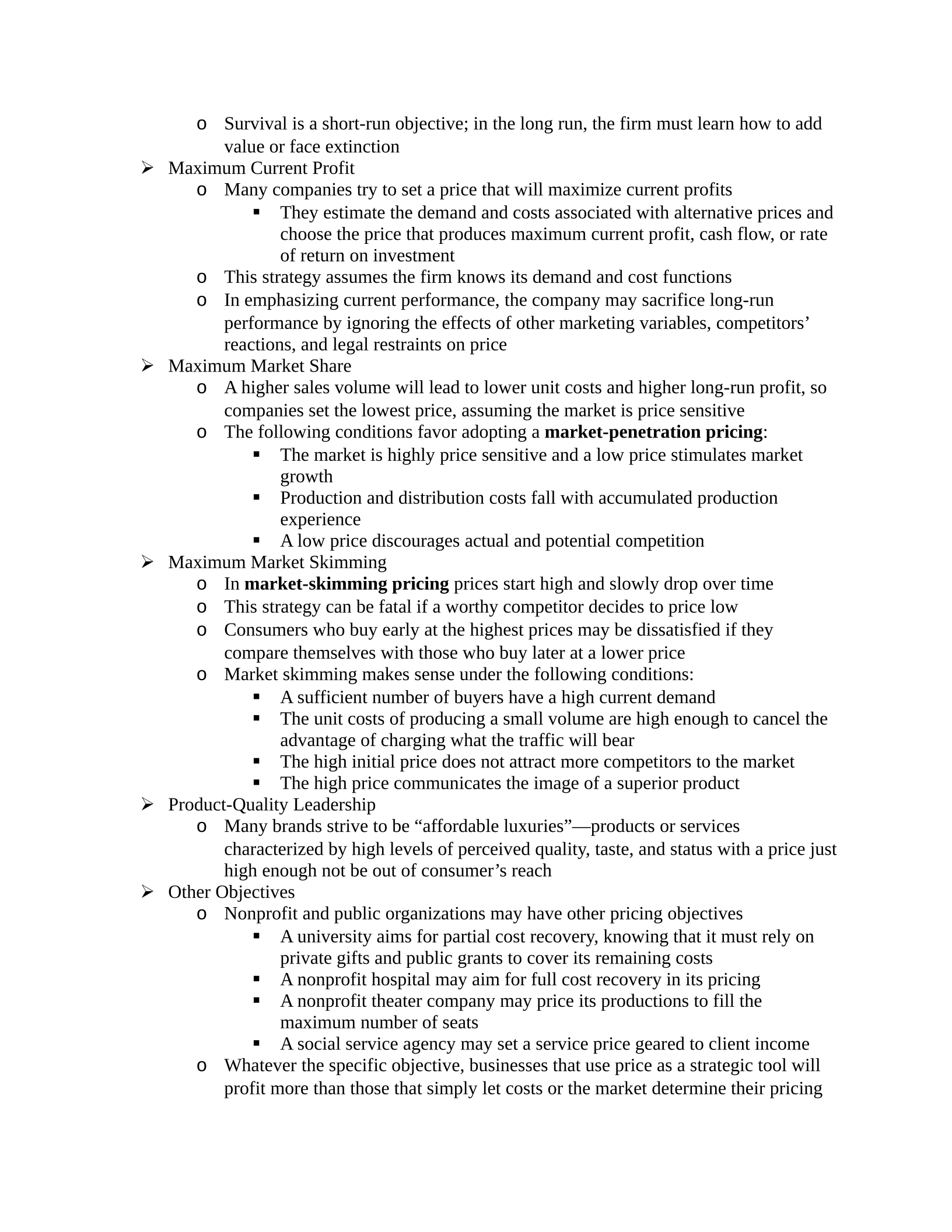
oSurvival is a short-run objective; in the long run, the firm must learn how to add
value or face extinction
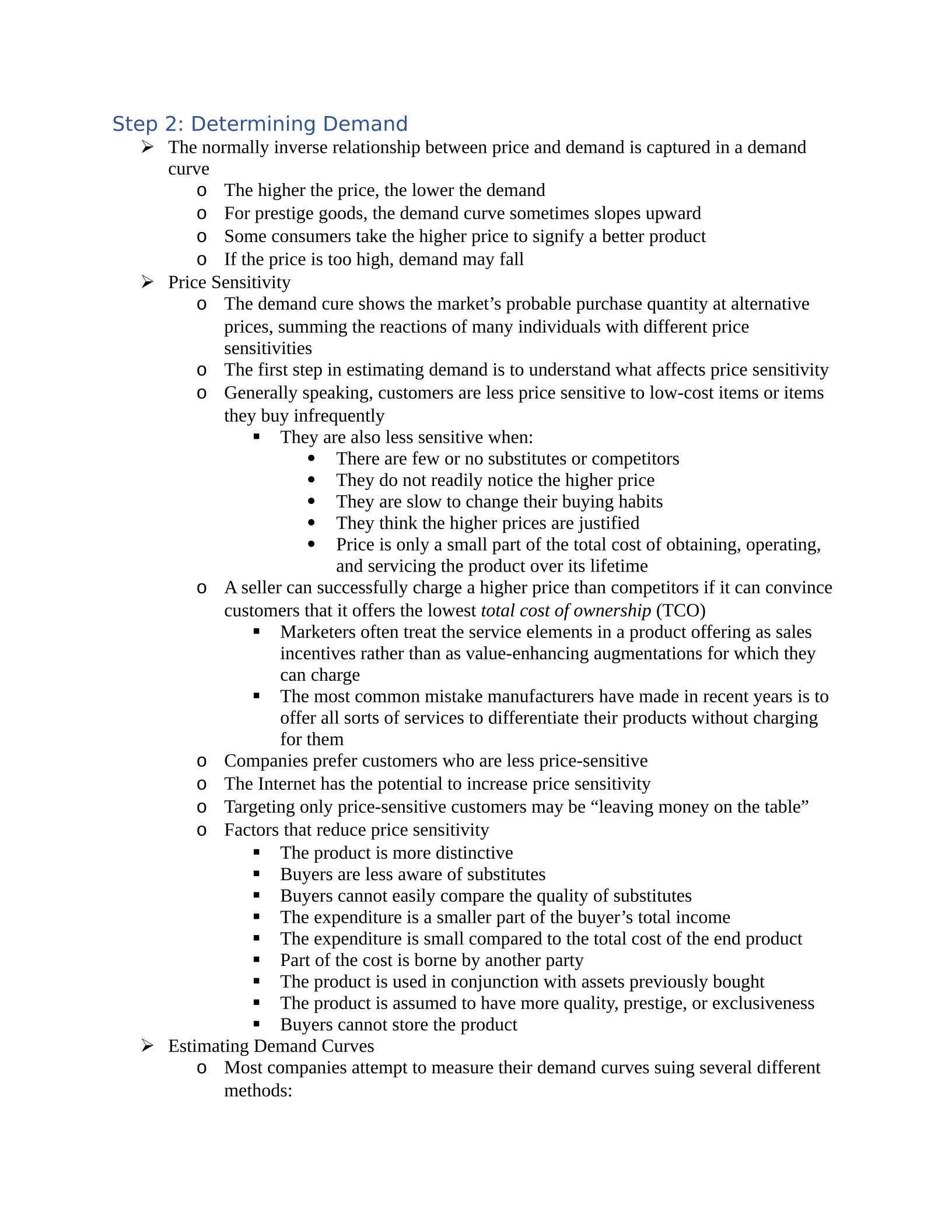
Maximum Current Profit
oMany companies try to set a price that will maximize current profits
They estimate the demand and costs associated with alternative prices and
choose the price that produces maximum current profit, cash flow, or rate
of return on investment
oThis strategy assumes the firm knows its demand and cost functions
oIn emphasizing current performance, the company may sacrifice long-run
performance by ignoring the effects of other marketing variables, competitors’
reactions, and legal restraints on price
Maximum Market Share
oA higher sales volume will lead to lower unit costs and higher long-run profit, so
companies set the lowest price, assuming the market is price sensitive
oThe following conditions favor adopting a market-penetration pricing:
The market is highly price sensitive and a low price stimulates market
growth
Production and distribution costs fall with accumulated production
experience
A low price discourages actual and potential competition
Maximum Market Skimming
oIn market-skimming pricing prices start high and slowly drop over time
oThis strategy can be fatal if a worthy competitor decides to price low
oConsumers who buy early at the highest prices may be dissatisfied if they
compare themselves with those who buy later at a lower price
oMarket skimming makes sense under the following conditions:
A sufficient number of buyers have a high current demand
The unit costs of producing a small volume are high enough to cancel the
advantage of charging what the traffic will bear
The high initial price does not attract more competitors to the market
The high price communicates the image of a superior product
Product-Quality Leadership
oMany brands strive to be “affordable luxuries”—products or services
characterized by high levels of perceived quality, taste, and status with a price just
high enough not be out of consumer’s reach
Other Objectives
oNonprofit and public organizations may have other pricing objectives
A university aims for partial cost recovery, knowing that it must rely on
private gifts and public grants to cover its remaining costs
A nonprofit hospital may aim for full cost recovery in its pricing
A nonprofit theater company may price its productions to fill the
maximum number of seats
A social service agency may set a service price geared to client income
oWhatever the specific objective, businesses that use price as a strategic tool will
profit more than those that simply let costs or the market determine their pricing
Step 2: Determining Demand
The normally inverse relationship between price and demand is captured in a demand
curve
oThe higher the price, the lower the demand
oFor prestige goods, the demand curve sometimes slopes upward
oSome consumers take the higher price to signify a better product
oIf the price is too high, demand may fall
Price Sensitivity
oThe demand cure shows the market’s probable purchase quantity at alternative
prices, summing the reactions of many individuals with different price
sensitivities
oThe first step in estimating demand is to understand what affects price sensitivity
oGenerally speaking, customers are less price sensitive to low-cost items or items
they buy infrequently
They are also less sensitive when:
There are few or no substitutes or competitors
They do not readily notice the higher price
They are slow to change their buying habits
They think the higher prices are justified
Price is only a small part of the total cost of obtaining, operating,
and servicing the product over its lifetime
oA seller can successfully charge a higher price than competitors if it can convince
customers that it offers the lowest total cost of ownership (TCO)
Marketers often treat the service elements in a product offering as sales
incentives rather than as value-enhancing augmentations for which they
can charge
The most common mistake manufacturers have made in recent years is to
offer all sorts of services to differentiate their products without charging
for them
oCompanies prefer customers who are less price-sensitive
oThe Internet has the potential to increase price sensitivity
oTargeting only price-sensitive customers may be “leaving money on the table”
oFactors that reduce price sensitivity
The product is more distinctive
Buyers are less aware of substitutes
Buyers cannot easily compare the quality of substitutes
The expenditure is a smaller part of the buyer’s total income
The expenditure is small compared to the total cost of the end product
Part of the cost is borne by another party
The product is used in conjunction with assets previously bought
The product is assumed to have more quality, prestige, or exclusiveness
Buyers cannot store the product
Estimating Demand Curves
oMost companies attempt to measure their demand curves suing several different
methods:
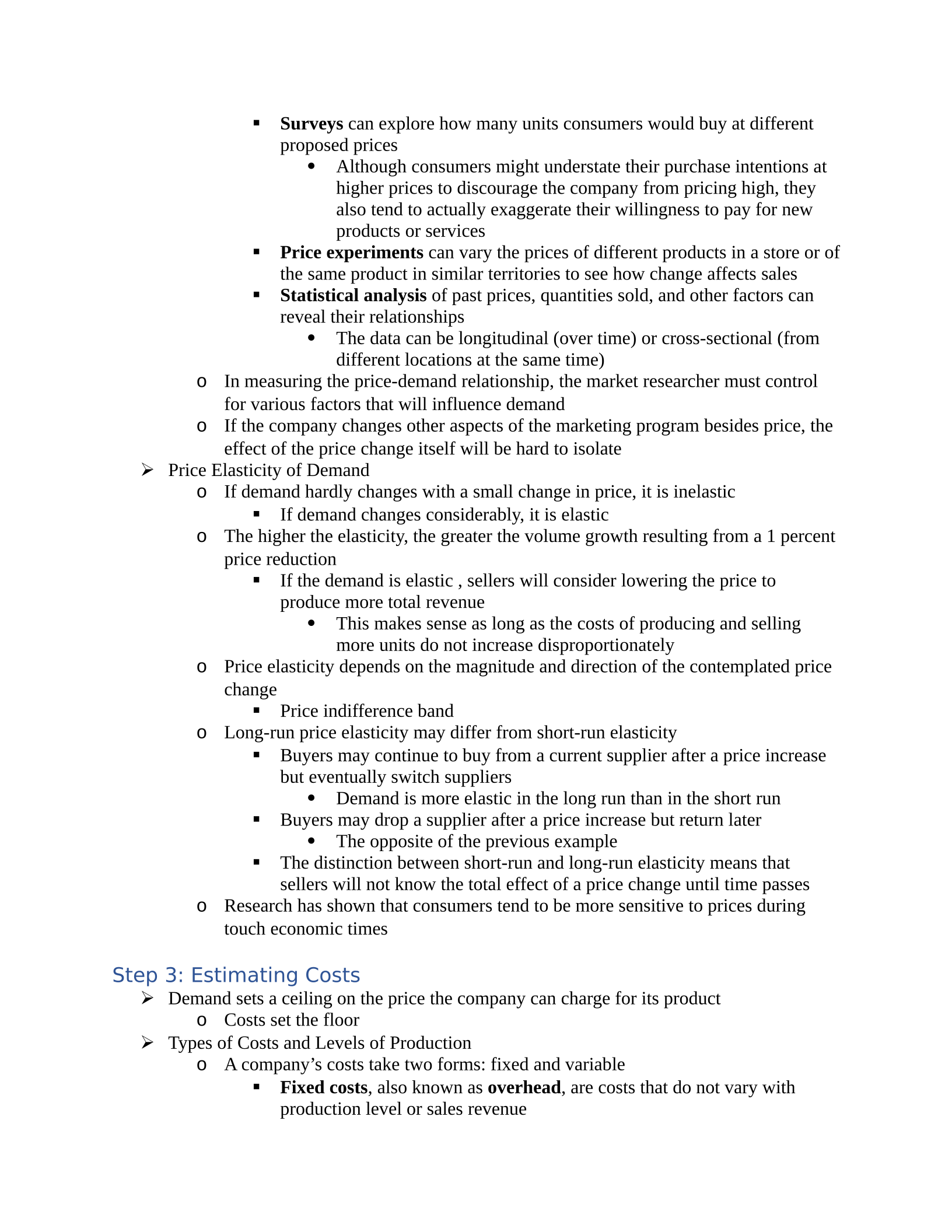
Surveys can explore how many units consumers would buy at different
proposed prices
Although consumers might understate their purchase intentions at
higher prices to discourage the company from pricing high, they
also tend to actually exaggerate their willingness to pay for new
products or services
Price experiments can vary the prices of different products in a store or of
the same product in similar territories to see how change affects sales
Statistical analysis of past prices, quantities sold, and other factors can
reveal their relationships
The data can be longitudinal (over time) or cross-sectional (from
different locations at the same time)
oIn measuring the price-demand relationship, the market researcher must control
for various factors that will influence demand
oIf the company changes other aspects of the marketing program besides price, the
effect of the price change itself will be hard to isolate
Price Elasticity of Demand
oIf demand hardly changes with a small change in price, it is inelastic
If demand changes considerably, it is elastic
oThe higher the elasticity, the greater the volume growth resulting from a 1 percent
price reduction
If the demand is elastic , sellers will consider lowering the price to
produce more total revenue
This makes sense as long as the costs of producing and selling
more units do not increase disproportionately
oPrice elasticity depends on the magnitude and direction of the contemplated price
change
Price indifference band
oLong-run price elasticity may differ from short-run elasticity
Buyers may continue to buy from a current supplier after a price increase
but eventually switch suppliers
Demand is more elastic in the long run than in the short run
Buyers may drop a supplier after a price increase but return later
The opposite of the previous example
The distinction between short-run and long-run elasticity means that
sellers will not know the total effect of a price change until time passes
oResearch has shown that consumers tend to be more sensitive to prices during
touch economic times
Step 3: Estimating Costs
Demand sets a ceiling on the price the company can charge for its product
oCosts set the floor
Types of Costs and Levels of Production
oA company’s costs take two forms: fixed and variable
Fixed costs, also known as overhead, are costs that do not vary with
production level or sales revenue
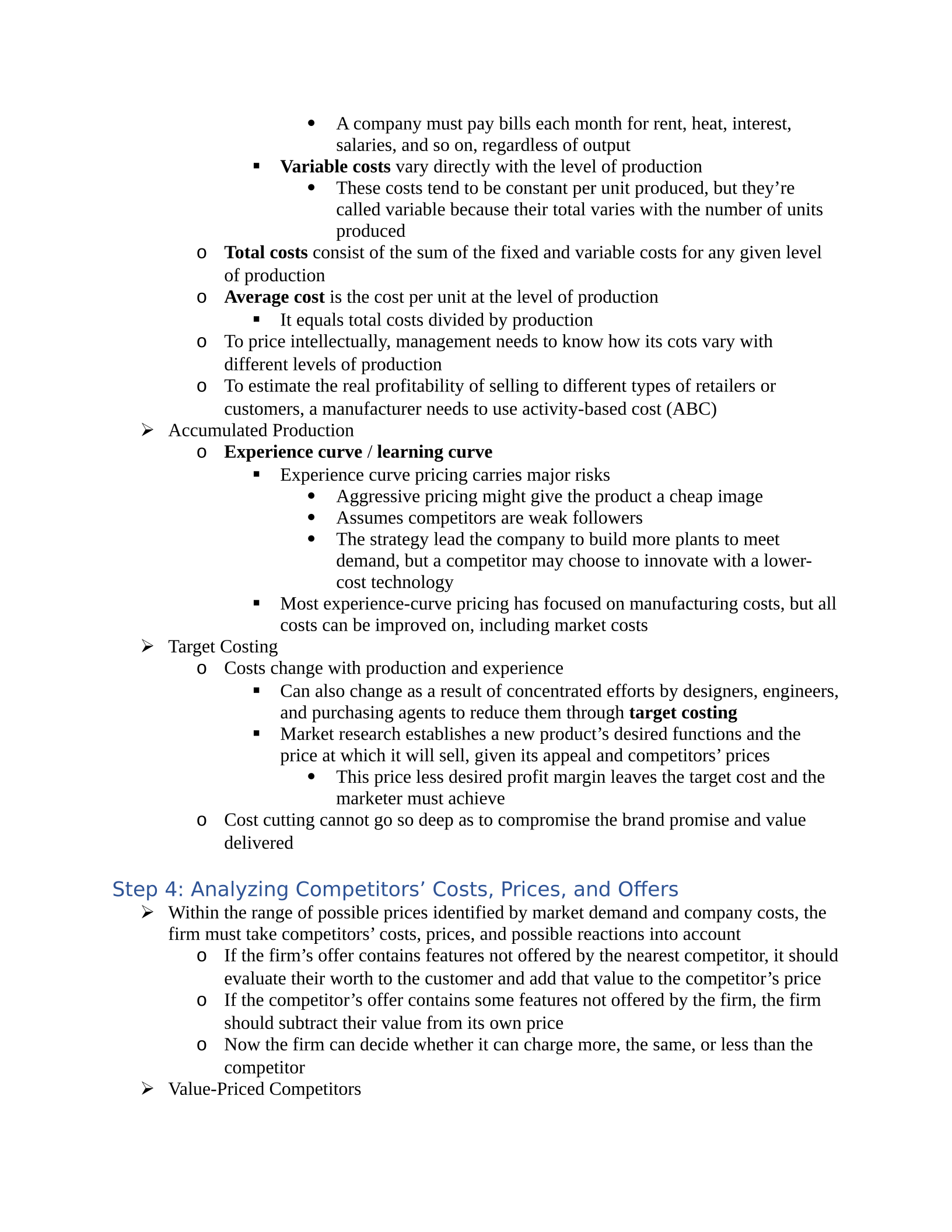
A company must pay bills each month for rent, heat, interest,
salaries, and so on, regardless of output
Variable costs vary directly with the level of production
These costs tend to be constant per unit produced, but they’re
called variable because their total varies with the number of units
produced
oTotal costs consist of the sum of the fixed and variable costs for any given level
of production
oAverage cost is the cost per unit at the level of production
It equals total costs divided by production
oTo price intellectually, management needs to know how its cots vary with
different levels of production
oTo estimate the real profitability of selling to different types of retailers or
customers, a manufacturer needs to use activity-based cost (ABC)
Accumulated Production
oExperience curve / learning curve
Experience curve pricing carries major risks
Aggressive pricing might give the product a cheap image
Assumes competitors are weak followers
The strategy lead the company to build more plants to meet
demand, but a competitor may choose to innovate with a lower-
cost technology
Most experience-curve pricing has focused on manufacturing costs, but all
costs can be improved on, including market costs
Target Costing
oCosts change with production and experience
Can also change as a result of concentrated efforts by designers, engineers,
and purchasing agents to reduce them through target costing
Market research establishes a new product’s desired functions and the
price at which it will sell, given its appeal and competitors’ prices
This price less desired profit margin leaves the target cost and the
marketer must achieve
oCost cutting cannot go so deep as to compromise the brand promise and value
delivered
Step 4: Analyzing Competitors’ Costs, Prices, and Offers
Within the range of possible prices identified by market demand and company costs, the
firm must take competitors’ costs, prices, and possible reactions into account
oIf the firm’s offer contains features not offered by the nearest competitor, it should
evaluate their worth to the customer and add that value to the competitor’s price
oIf the competitor’s offer contains some features not offered by the firm, the firm
should subtract their value from its own price
oNow the firm can decide whether it can charge more, the same, or less than the
competitor
Value-Priced Competitors
oCompanies offering the powerful combination of low price and high quality are
capturing the hearts and wallets of consumers all over the world
oUpstart firms often rely on serving one or a few consumer segments, providing
better delivery or just one additional benefit, and matching low prices with highly
efficient operations to keep costs down
oCompanies should set up their own low-cost operations to compete with value-
priced competitors only if:
Their existing business will become more competitive as a result
The new business will derive some advantages it would not have gained if
independent
Step 5: Selecting A Pricing Method
Markup Pricing
oThe most elementary pricing method is to add a standard markup to the product’s
cost
oStandard markups do not generally make logical sense
Any pricing method that ignores current demand, perceived value, and
competition is not likely to lead to the optimal price
Markup pricing works only if the marked-up price actually brings in the
expected level of sales
oWhy markup pricing remains popular:
Sellers can determine costs much more easily than they can estimate
demand
By typing the price to cost, sellers simplify the pricing task
When all firms in the industry use this pricing method, prices tend to be
similar and price competition is minimized
Many people feel cost-plus pricing is fairer to both buyers and sellers
Sellers do not take advantage of buyers when the latter’s demand
becomes acute and sellers earn a fair return on investment
Target-Return Pricing
oIn target-return pricing, the firm determines the price that yields its target rate
of return on investment
Powered by TCPDF (www.tcpdf.org)

