


REPORT SHEET: LAB 1 CHEM 108
Ashley Martin
name section date
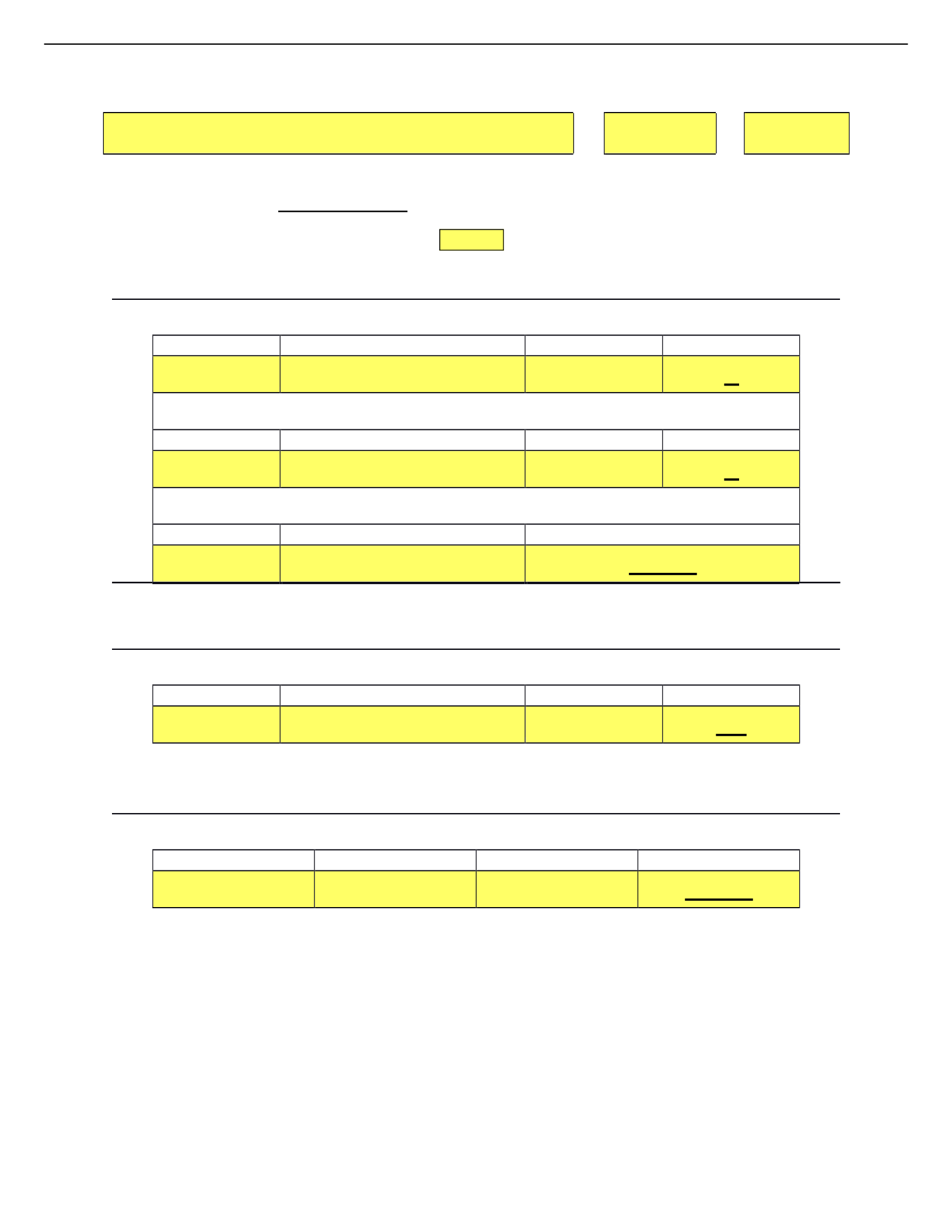
SIMULATION: Isotopes and Atomic Mass
Fill in all the information in boxes highlighted in yellow!
I. Carbon isotopes: “Make Isotopes”
First unstable “heavy” isotope:
Mass number
Isotope name
# of protons
# of neutrons
14
Carbon-14
6
8
First unstable “light” isotope:
Mass number
Isotope name
# of protons
# of neutrons
11
Carbon-11
6
5
Most abundant isotope:
Mass number
Isotope name
% abundance
12
Carbon-12
98.93
II. Oxygen isotopes: “Make Isotopes”
Heaviest stable isotope:
Mass number
Isotope name
# of protons
# of neutrons
18
Oxygen-18
8
10
III. Chlorine isotopes: “Mix Isotopes”
Composition of Cl found in nature:
# 35Cl atoms
# 37Cl atoms
% abundance 35Cl
% abundance 37Cl
10
3
75.76
24.24
CHEM 108
EXPERIMENT: Laboratory Techniques and Measurements
Use rules of significant figures; include units with each result.
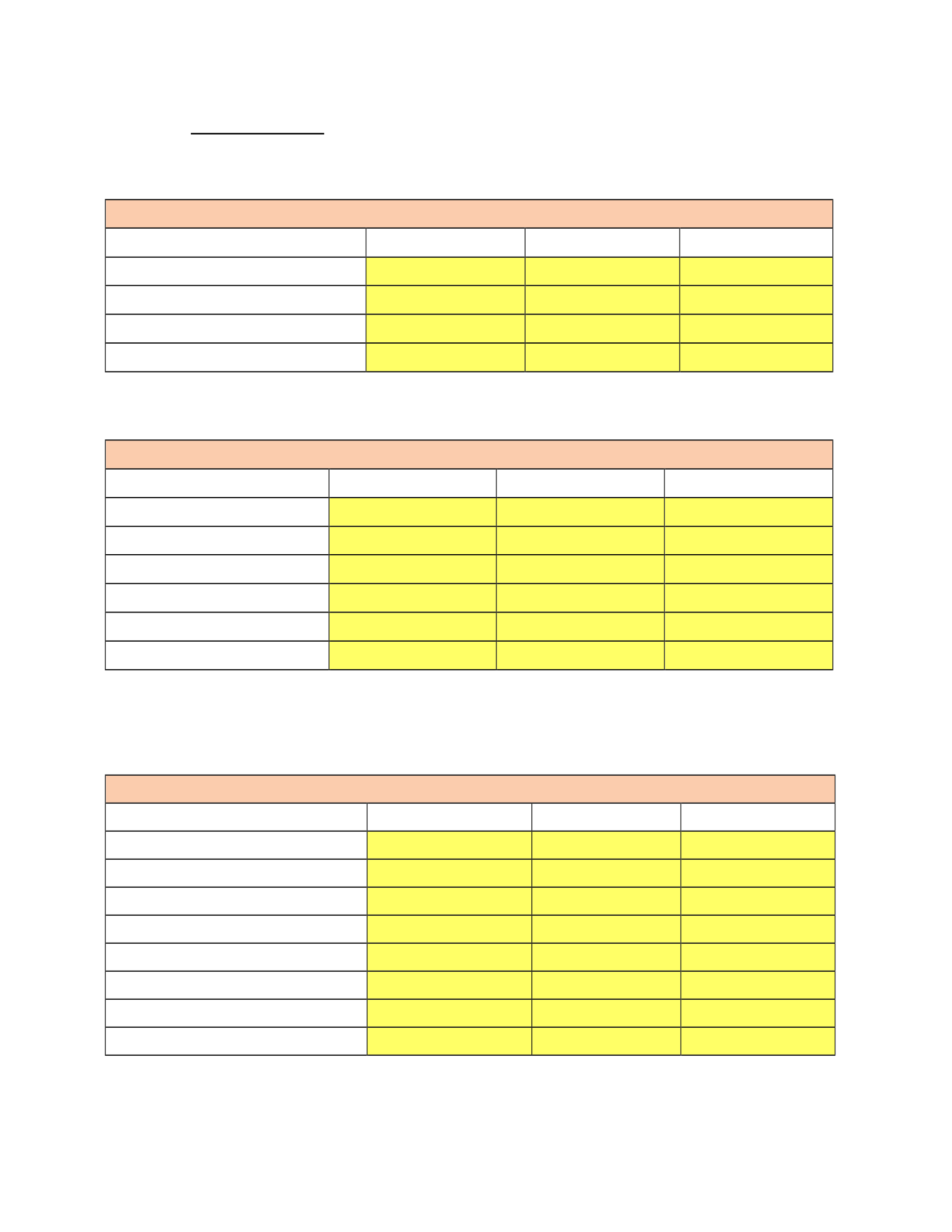
Data Table 1: Length measurements
Object
Length (cm)
Length (mm)
Length (m)
CD or DVD
12
120
0.12
Key
5.2
52
0.0052
Spoon
17.2
172
0.172
Fork
20.3
203
0.203
Data Table 2: Temperature measurements
Water
Temperature (°C)
Temperature (°F)
Temperature (K)
Hot from tap
43.3
110
316.5
Boiling
100
212
373.2
Boiling for 5 minutes
92
197
364.8
Cold from tap
7
-13-9
248.2
Ice water – 1 minute
1
-17.2
245.8
Ice water – 5 minutes
3
-16.1
246.4
Data Table 3: Mass measurements
Object
Estimated Mass (g)
Actual Mass (g)
Actual mass (kg)
Pen or pencil
8.70
8.78
0.00878
3 Pennies
7.47
7.54
0.00754
1 Quarter
5.55
5.64
0.00564
2 Quarters, 3 Dimes
18.0
18.06
0.01806
4 Dimes, 5 Pennies
21.57
21.61
0.02161
3 Quarters, 1 Dime, 5 Pennies
31.79
31.82
0.03182
Key
9.17
9.39
0.00939
Key, 1 Quarter, 4 Pennies
24.89
25.09
0.02509
CHEM 108
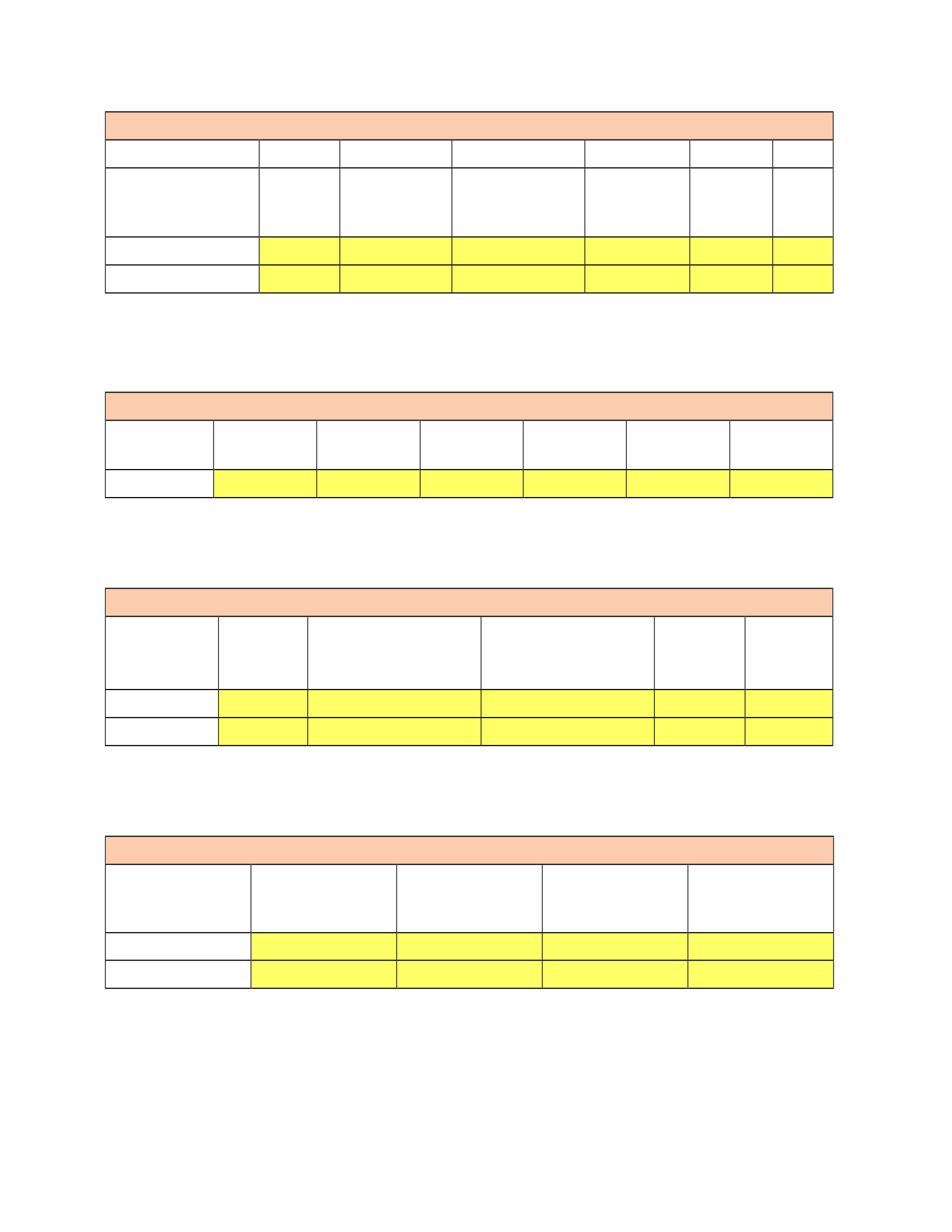
Data Table 4: Liquid measurements
Mass A
Mass B
Mass B - A
Liquid
Volume
(mL)
Graduated
Cylinder (g)
Graduated
Cylinder
with liquid (g)
Liquid (g)
Density
g/mL
%
Error
Water
5
17.71
22.81
5.1
1.02
2
Isopropyl alcohol
5
17.71
22.26
4.6
0.91
15
Data Table 5: Magnet – Measurement Method
Object:
Mass
(g)
Length
(cm)
Width
(cm)
Height
(cm)
Volume
(cm3)
Density
(g/cm
3
)
Magnet
4.24
2.5
0.5
0.5
0.625
7g/ml
Data Table 6: Displacement Method
Object
Mass
(g)
Initial volume of
graduated cylinder
(mL)
Final volume of
graduated cylinder
(mL)
Object
Volume
(mL)
Density
(g/mL)
Magnet
4.24
7.0
9
2
2.12
Metal bolt
7.71
7.0
9.2
2.2
3.5
Data Table 7: Archimedes’ Method
Object
Mass
(g)
Mass of
Displaced
Water (g)
Volume of
Displaced
Water (mL)
Density
(g/mL)
Metal Bolt
7.7
1.1
0.93
7.2
Magnet
4.24
0.9
1.12
4.7

CHEM 108
It could be that the sea level is higher than the normal level needed for water to boil at 100
degrees celius
0.02% & 0.01%
1.20g/cm³
Post-Laboratory Questions
Show work whenever feasible! Use rules of significant figures; include units with each result.
A.
Water boils at 100°C at sea level. If the water in this experiment did not boil at 100°C, what
could be the reason?
B.
While heating two different samples of water at sea level, one boils at 102°C and one boils at
99.2°C. Calculate the percent error for each sample from the theoretical 100.0°C.
C.
An unknown, rectangular substance measures 3.6 cm high, 4.21 cm long, and 1.17 cm wide. If
the mass is 21.3 g, what is this substance’s density (in grams per milliliter)?

CHEM 108
1.35mL
It could result in the loss of water from the beaker or changes in the weight of the object
related to the principle. The force from dropping the object would not give a accurate result as
we are relating the results to the buoyancy of the object.
The measurements were way off. I would trust a more calculated volume versus the
Archimedes’ principle that requires steps that could result in more errors.
D.
A sample of gold (Au) has a mass of 26.15 g. Given that the theoretical density is 19.30 g/mL,
what is the volume of the gold sample?
E.
What would happen if you dropped the object into the beaker while using the Archimedes’
Principle method instead of submerging the object?
F.
How did the magnet’s density measurement using the Archimedes’ Principle compare to the
density measurement using the calculated volume? Which method might be more accurate?
Why?

CHEM 108
The density of this material is 15g/ml. The actual density of gold is 19.30g/ml so the material
cannot be solid gold and may contain other materials.
G.
You are given a small piece of gold colored material and want to determine if it is actually gold.
Using the Archimedes’ Principle, you find that the volume is 0.40 cm3 and the mass is 6.0 g.
What conclusions can you reach from your simple density analysis?

