


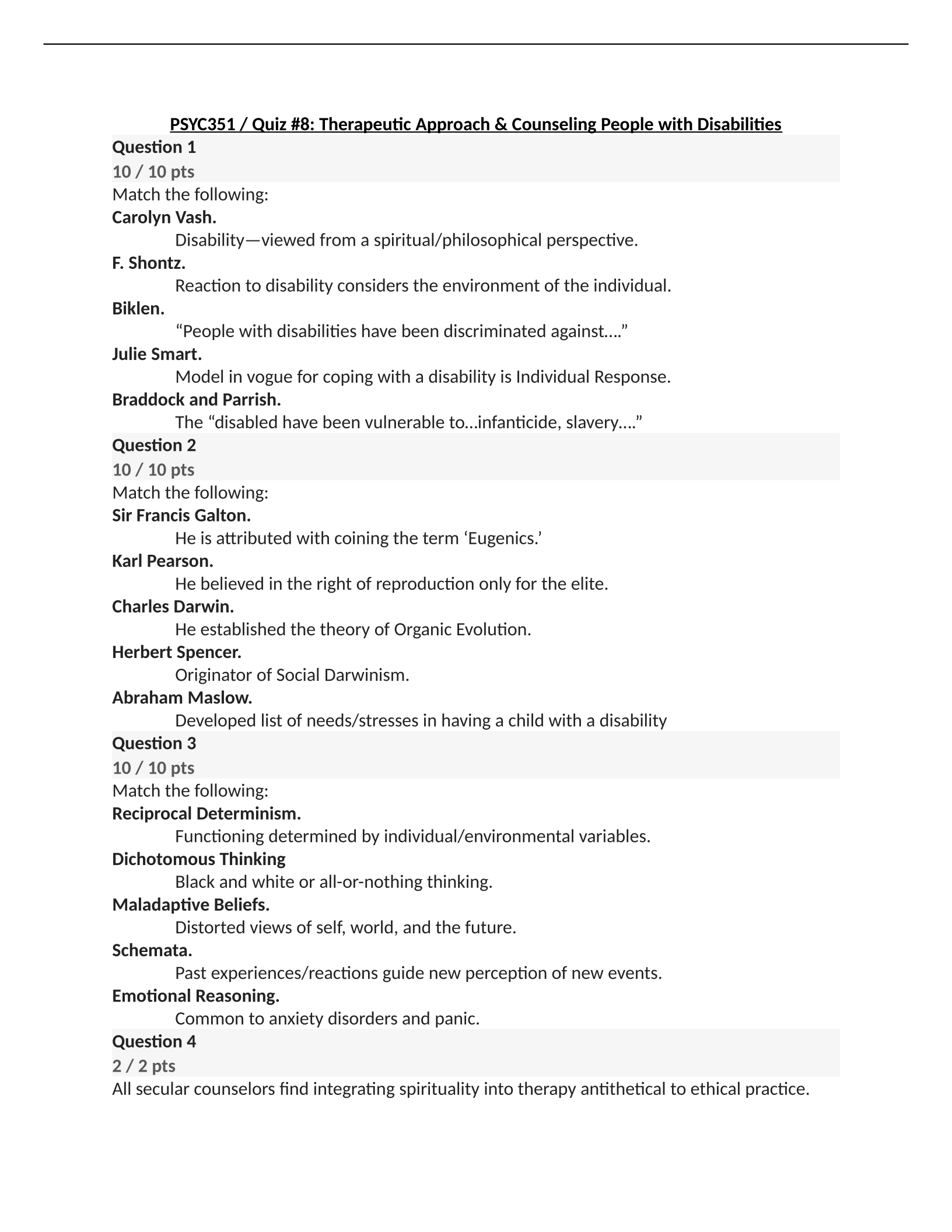
PSYC351 / Quiz #8: Therapeutic Approach & Counseling People with Disabilities
Question 1
10 / 10 pts
Match the following:
Carolyn Vash.
Disability—viewed from a spiritual/philosophical perspective.
F. Shontz.
Reaction to disability considers the environment of the individual.
Biklen.
“People with disabilities have been discriminated against….”
Julie Smart.
Model in vogue for coping with a disability is Individual Response.
Braddock and Parrish.
The “disabled have been vulnerable to…infanticide, slavery….”
Question 2
10 / 10 pts
Match the following:
Sir Francis Galton.
He is attributed with coining the term ‘Eugenics.’
Karl Pearson.
He believed in the right of reproduction only for the elite.
Charles Darwin.
He established the theory of Organic Evolution.
Herbert Spencer.
Originator of Social Darwinism.
Abraham Maslow.
Developed list of needs/stresses in having a child with a disability
Question 3
10 / 10 pts
Match the following:
Reciprocal Determinism.
Functioning determined by individual/environmental variables.
Dichotomous Thinking
Black and white or all-or-nothing thinking.
Maladaptive Beliefs.
Distorted views of self, world, and the future.
Schemata.
Past experiences/reactions guide new perception of new events.
Emotional Reasoning.
Common to anxiety disorders and panic.
Question 4
2 / 2 pts
All secular counselors find integrating spirituality into therapy antithetical to ethical practice.
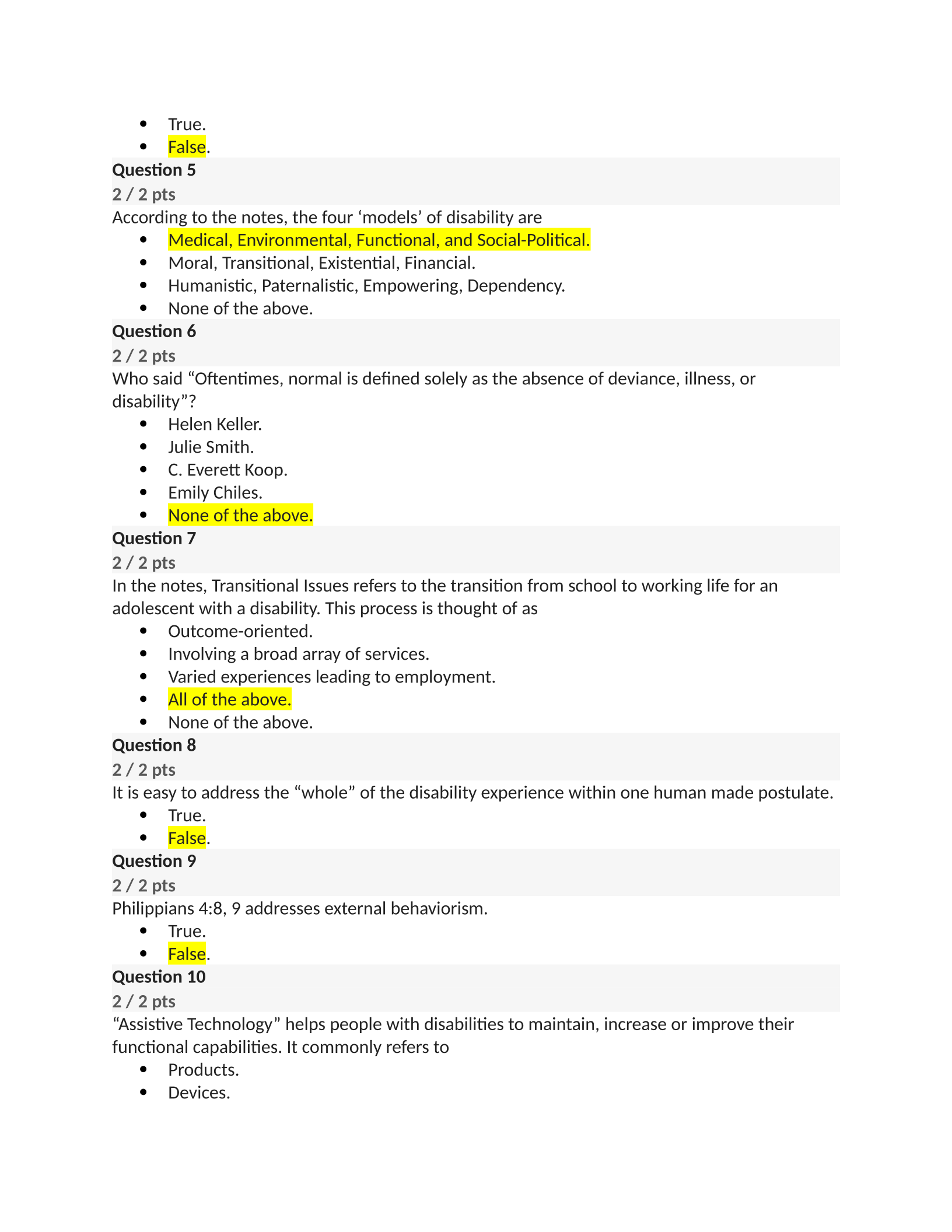
True.
False.
Question 5
2 / 2 pts
According to the notes, the four ‘models’ of disability are
Medical, Environmental, Functional, and Social-Political.
Moral, Transitional, Existential, Financial.
Humanistic, Paternalistic, Empowering, Dependency.
None of the above.
Question 6
2 / 2 pts
Who said “Oftentimes, normal is defined solely as the absence of deviance, illness, or
disability”?
Helen Keller.
Julie Smith.
C. Everett Koop.
Emily Chiles.
None of the above.
Question 7
2 / 2 pts
In the notes, Transitional Issues refers to the transition from school to working life for an
adolescent with a disability. This process is thought of as
Outcome-oriented.
Involving a broad array of services.
Varied experiences leading to employment.
All of the above.
None of the above.
Question 8
2 / 2 pts
It is easy to address the “whole” of the disability experience within one human made postulate.
True.
False.
Question 9
2 / 2 pts
Philippians 4:8, 9 addresses external behaviorism.
True.
False.
Question 10
2 / 2 pts
“Assistive Technology” helps people with disabilities to maintain, increase or improve their
functional capabilities. It commonly refers to
Products.
Devices.
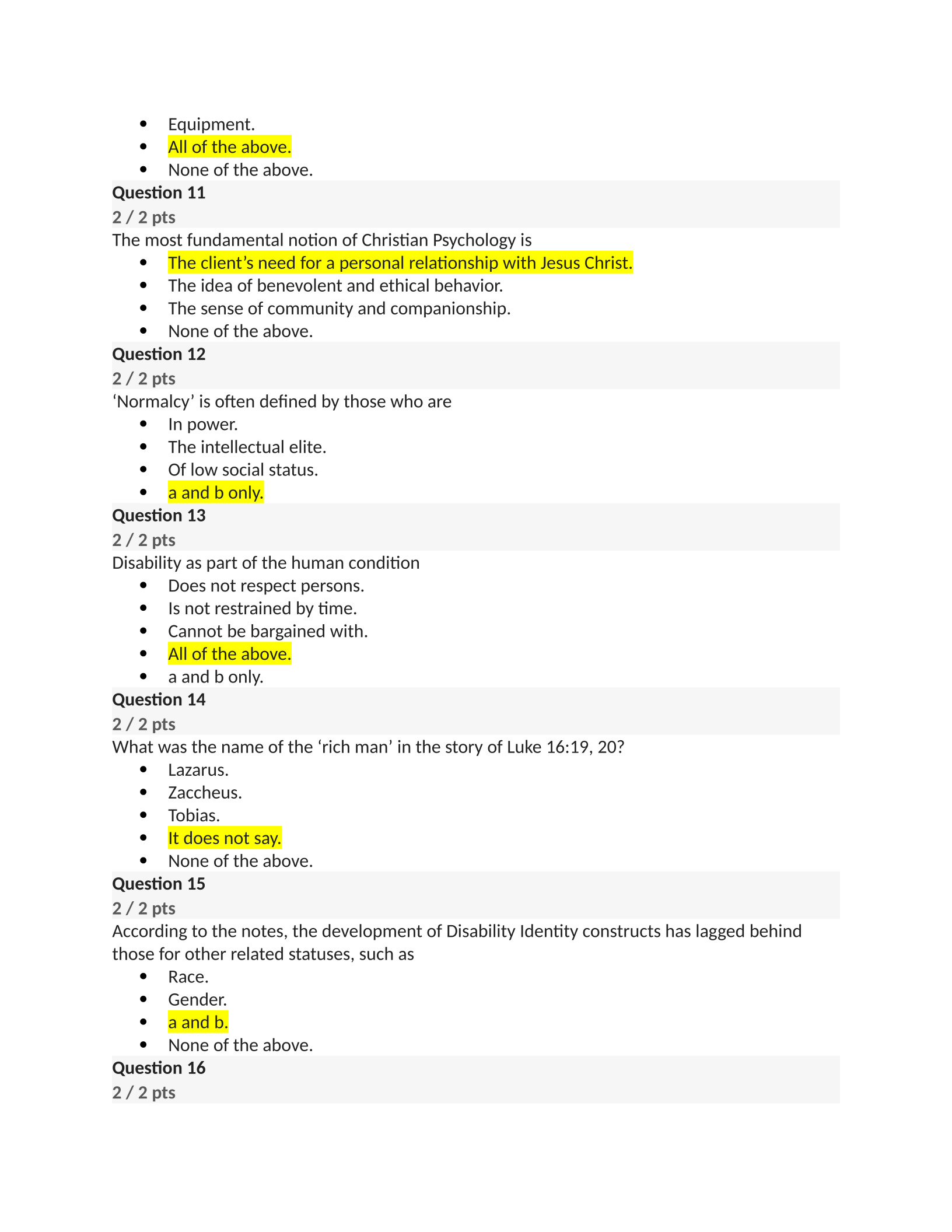
Equipment.
All of the above.
None of the above.
Question 11
2 / 2 pts
The most fundamental notion of Christian Psychology is
The client’s need for a personal relationship with Jesus Christ.
The idea of benevolent and ethical behavior.
The sense of community and companionship.
None of the above.
Question 12
2 / 2 pts
‘Normalcy’ is often defined by those who are
In power.
The intellectual elite.
Of low social status.
a and b only.
Question 13
2 / 2 pts
Disability as part of the human condition
Does not respect persons.
Is not restrained by time.
Cannot be bargained with.
All of the above.
a and b only.
Question 14
2 / 2 pts
What was the name of the ‘rich man’ in the story of Luke 16:19, 20?
Lazarus.
Zaccheus.
Tobias.
It does not say.
None of the above.
Question 15
2 / 2 pts
According to the notes, the development of Disability Identity constructs has lagged behind
those for other related statuses, such as
Race.
Gender.
a and b.
None of the above.
Question 16
2 / 2 pts
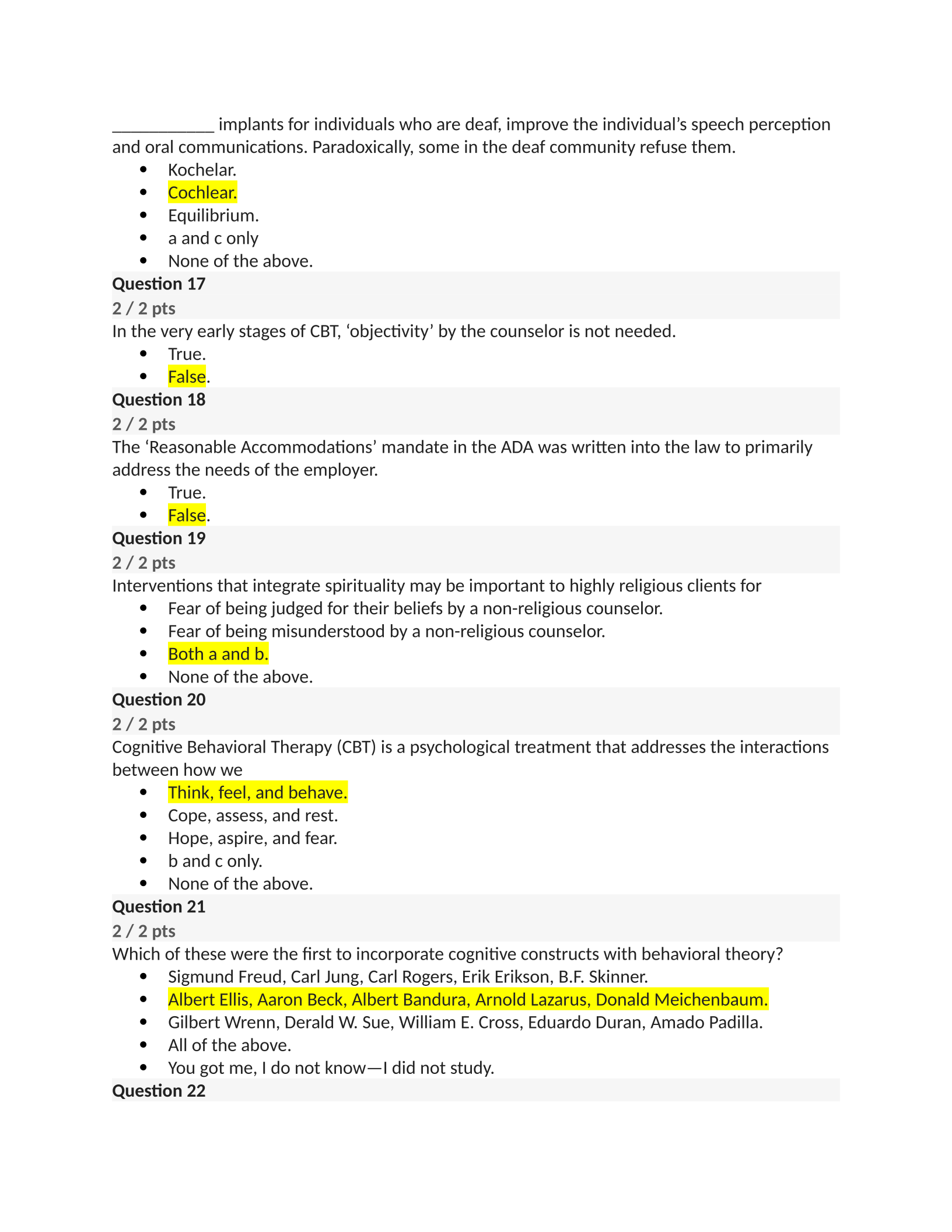
___________ implants for individuals who are deaf, improve the individual’s speech perception
and oral communications. Paradoxically, some in the deaf community refuse them.
Kochelar.
Cochlear.
Equilibrium.
a and c only
None of the above.
Question 17
2 / 2 pts
In the very early stages of CBT, ‘objectivity’ by the counselor is not needed.
True.
False.
Question 18
2 / 2 pts
The ‘Reasonable Accommodations’ mandate in the ADA was written into the law to primarily
address the needs of the employer.
True.
False.
Question 19
2 / 2 pts
Interventions that integrate spirituality may be important to highly religious clients for
Fear of being judged for their beliefs by a non-religious counselor.
Fear of being misunderstood by a non-religious counselor.
Both a and b.
None of the above.
Question 20
2 / 2 pts
Cognitive Behavioral Therapy (CBT) is a psychological treatment that addresses the interactions
between how we
Think, feel, and behave.
Cope, assess, and rest.
Hope, aspire, and fear.
b and c only.
None of the above.
Question 21
2 / 2 pts
Which of these were the first to incorporate cognitive constructs with behavioral theory?
Sigmund Freud, Carl Jung, Carl Rogers, Erik Erikson, B.F. Skinner.
Albert Ellis, Aaron Beck, Albert Bandura, Arnold Lazarus, Donald Meichenbaum.
Gilbert Wrenn, Derald W. Sue, William E. Cross, Eduardo Duran, Amado Padilla.
All of the above.
You got me, I do not know—I did not study.
Question 22
2 / 2 pts
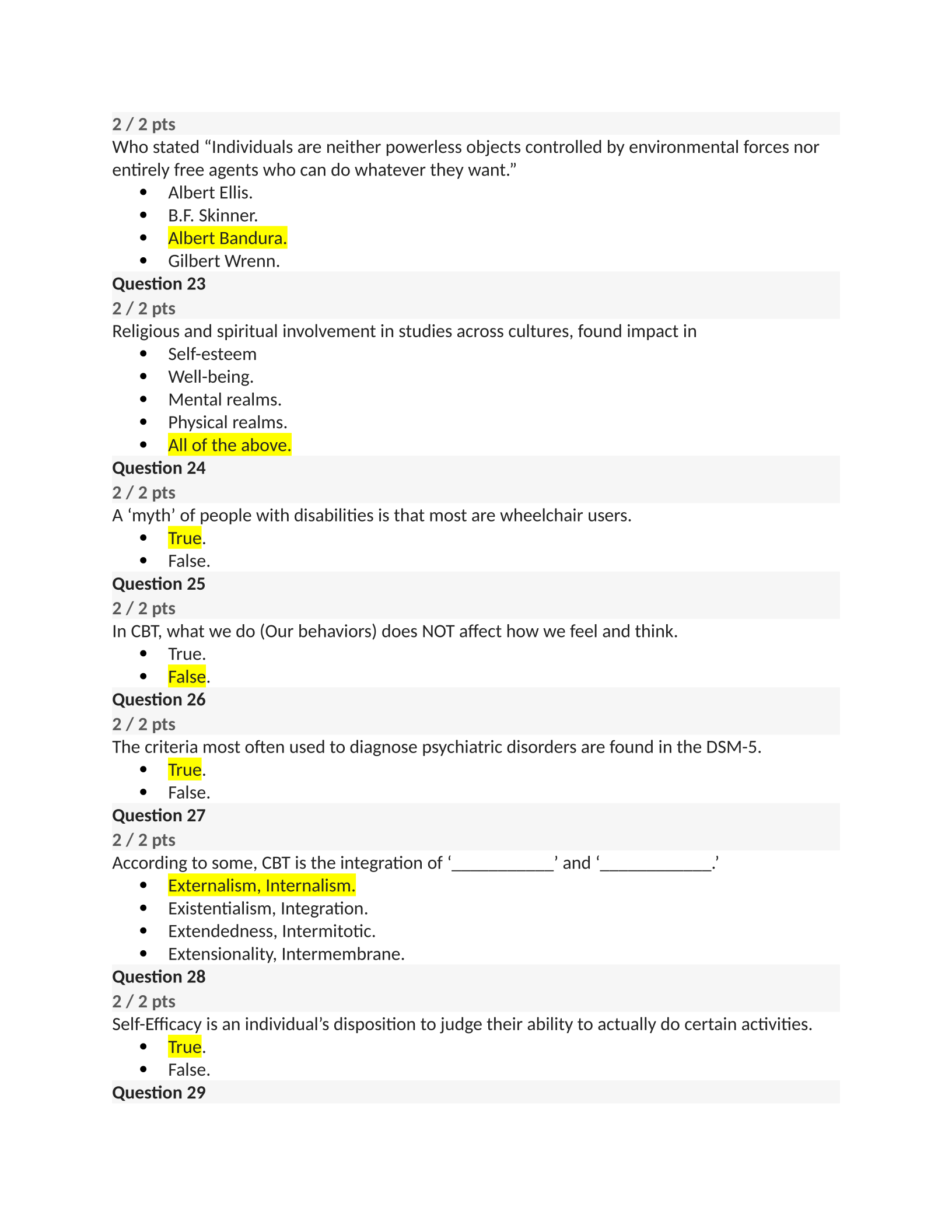
Who stated “Individuals are neither powerless objects controlled by environmental forces nor
entirely free agents who can do whatever they want.”
Albert Ellis.
B.F. Skinner.
Albert Bandura.
Gilbert Wrenn.
Question 23
2 / 2 pts
Religious and spiritual involvement in studies across cultures, found impact in
Self-esteem
Well-being.
Mental realms.
Physical realms.
All of the above.
Question 24
2 / 2 pts
A ‘myth’ of people with disabilities is that most are wheelchair users.
True.
False.
Question 25
2 / 2 pts
In CBT, what we do (Our behaviors) does NOT affect how we feel and think.
True.
False.
Question 26
2 / 2 pts
The criteria most often used to diagnose psychiatric disorders are found in the DSM-5.
True.
False.
Question 27
2 / 2 pts
According to some, CBT is the integration of ‘___________’ and ‘____________.’
Externalism, Internalism.
Existentialism, Integration.
Extendedness, Intermitotic.
Extensionality, Intermembrane.
Question 28
2 / 2 pts
Self-Efficacy is an individual’s disposition to judge their ability to actually do certain activities.
True.
False.
Question 29
2 / 2 pts
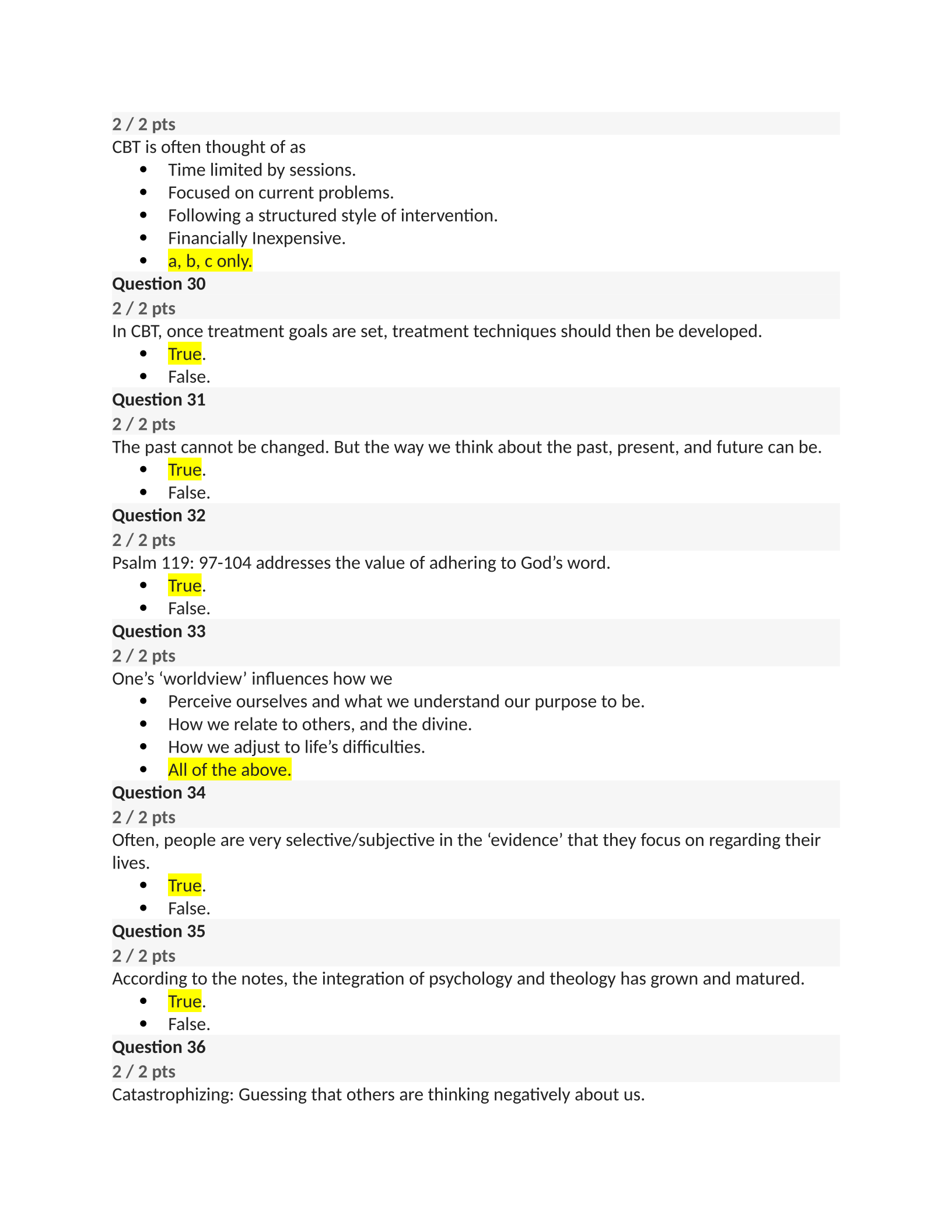
CBT is often thought of as
Time limited by sessions.
Focused on current problems.
Following a structured style of intervention.
Financially Inexpensive.
a, b, c only.
Question 30
2 / 2 pts
In CBT, once treatment goals are set, treatment techniques should then be developed.
True.
False.
Question 31
2 / 2 pts
The past cannot be changed. But the way we think about the past, present, and future can be.
True.
False.
Question 32
2 / 2 pts
Psalm 119: 97-104 addresses the value of adhering to God’s word.
True.
False.
Question 33
2 / 2 pts
One’s ‘worldview’ influences how we
Perceive ourselves and what we understand our purpose to be.
How we relate to others, and the divine.
How we adjust to life’s difficulties.
All of the above.
Question 34
2 / 2 pts
Often, people are very selective/subjective in the ‘evidence’ that they focus on regarding their
lives.
True.
False.
Question 35
2 / 2 pts
According to the notes, the integration of psychology and theology has grown and matured.
True.
False.
Question 36
2 / 2 pts
Catastrophizing: Guessing that others are thinking negatively about us.
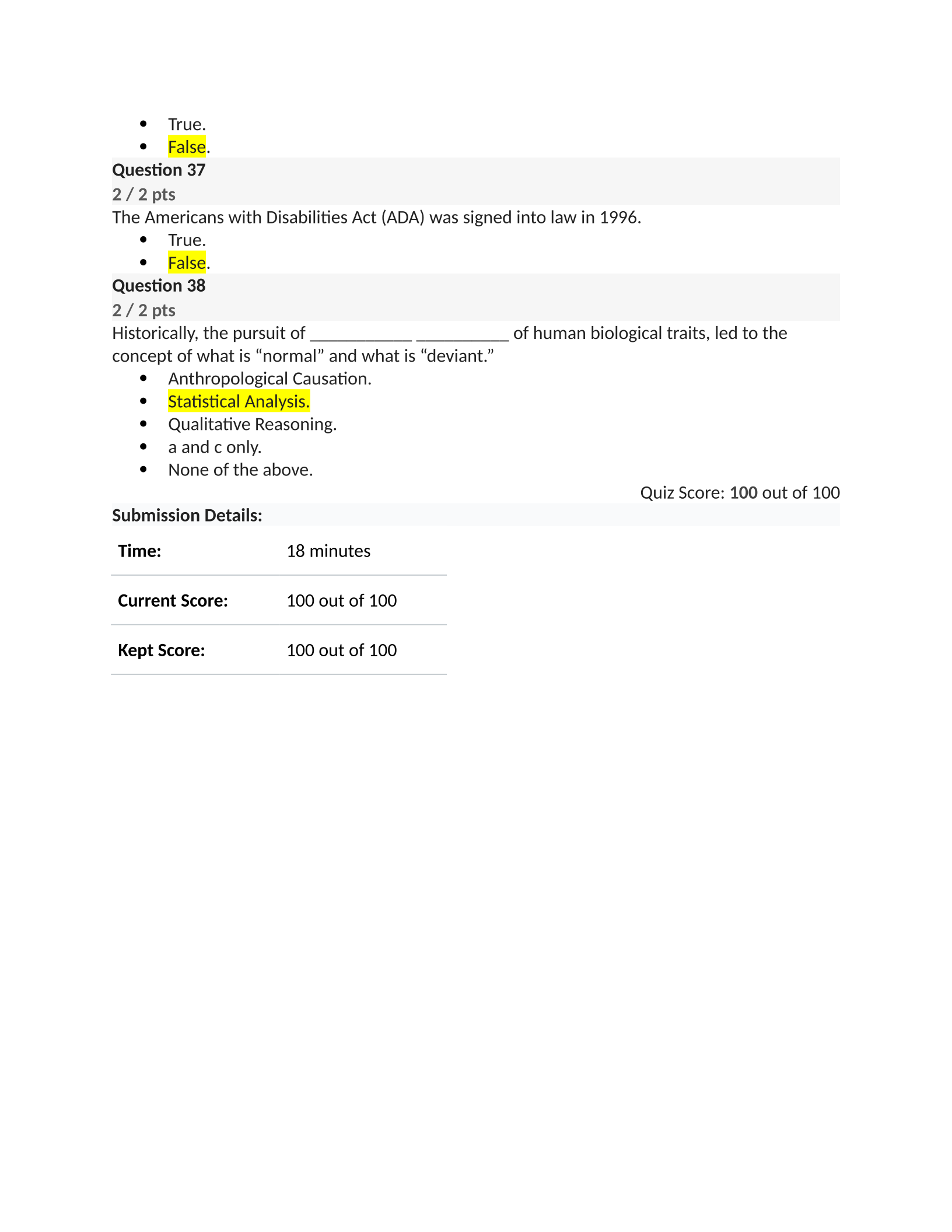
True.
False.
Question 37
2 / 2 pts
The Americans with Disabilities Act (ADA) was signed into law in 1996.
True.
False.
Question 38
2 / 2 pts
Historically, the pursuit of ___________ __________ of human biological traits, led to the
concept of what is “normal” and what is “deviant.”
Anthropological Causation.
Statistical Analysis.
Qualitative Reasoning.
a and c only.
None of the above.
Quiz Score: 100 out of 100
Submission Details:
Time: 18 minutes
Current Score: 100 out of 100
Kept Score: 100 out of 100
Powered by TCPDF (www.tcpdf.org)

